We Ran Thanksgiving Like a Live Show (Run Sheets, Topic Cards, and All) and Nobody Cried This Year
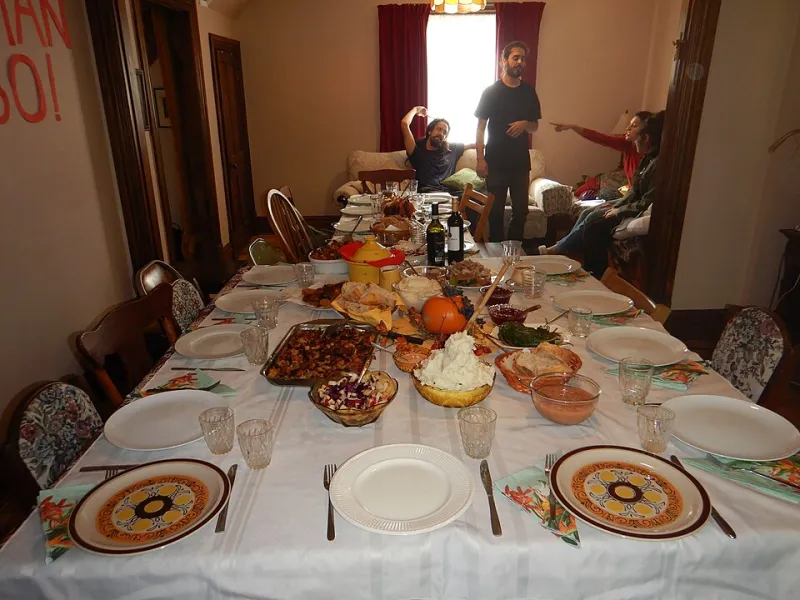
Photo: Helena Jacoba, CC BY 2.0, via Wikimedia Commons
ELLEN: Karen has hosted her family's Thanksgiving for eleven years. I've co-hosted mine for three. And somewhere around the second year of the gravy incident — we'll get to the gravy incident — we realized something that changed everything:
KAREN: We already knew how to do this. We just weren't doing it on purpose.
ELLEN: Right. We've spent a decade running a podcast, hosting events, and doing live shows where two people who love each other but occasionally disagree —
KAREN: — occasionally?
ELLEN: — have to share a room with a mixed audience and get through it with everyone still speaking. That's Thanksgiving. That's literally the job description. So we started borrowing the tools. Run sheets. Topic cards. Transitions. Ad breaks. And this year, for the first time in recorded family history, nobody left the table early and nobody cried. (Karen's mom says the bar is on the floor. The bar is on the floor and we are proud of ourselves anyway.)
The Seating Chart Is Not Petty. The Seating Chart Is Strategy.
KAREN: Every year someone accuses me of overthinking the seating chart, and every year those same people end up seated next to someone they love, eating in peace. Coincidence? No. It's a run sheet.
Here's what we do: write every guest's name on an index card. Then arrange them like a set list. You're not just separating the people who fight — you're pairing the people who click. My cousin Marcy is a lot, but she's a delight next to my brother-in-law, who finds her hilarious. Put Marcy next to my aunt and it's a hostage situation.
ELLEN: The pro move is the buffer seat. Every combustible pair gets a buffer — someone warm, someone neutral, someone who can redirect. At our show, when a segment is going off the rails, the other person jumps in with a transition. Your buffer is your transition. Brief them beforehand. One sentence: "If things get warm over there, ask Dad about the boat."
KAREN: The boat. The boat has saved Thanksgiving three separate times.
Topic Cards: The Kindergarten Trick That Works on Grown Men
ELLEN: Before guests arrive, we put three or four conversation starter cards at each place setting. Nothing heavy — best road trip you've ever taken, the food you'd eat for the rest of your life, a compliment you received that you've never forgotten.
KAREN: I was skeptical. My uncle Dave, who once spent a full dinner explaining why the weather channel has an agenda, picked up a card, read it out loud, and then told a story about hitchhiking in 1978 that the entire table listened to. Voluntarily. With follow-up questions.
ELLEN: It works because it gives everyone permission to be interesting instead of right. On the show, we never open with the hard topic. You warm the room up first. Thanksgiving is no different. The cards are the warm-up act.
Every Show Needs an Ad Break
KAREN: This might be the single most important thing we learned from doing this podcast: you cannot run a live segment for three straight hours. Nobody can. There's a reason shows have breaks.
So build one in. We serve the main course, let it run a good forty-five minutes, and then — before dessert, before the wine hits its third wind — we get everyone up. Walk to the park. Look at the neighbor's inflatable turkey. Ask for help finding the good serving bowls. Fifteen minutes of standing and moving resets the whole room.
ELLEN: It's the same reason we never record a difficult episode in one take. You come back from the break and everyone's a little softer. My family thought I was being quirky the first year I did the pre-dessert walk. Now my mother leads it. She has a whistle.
When Someone Goes Off Script: The Art of the Redirect
KAREN: It will happen. Someone will bring up the election, or the wedding that got canceled, or why you still haven't fixed the fence. On the show, when a segment derails, we have one move: acknowledge, redirect, move on. "You know, that's a big one — hey, before I forget, who wants to hear about the boat?"
You're not shutting anyone down. You're the host. The host protects the room.
ELLEN: And if it truly will not die? You give it a scheduled time. Karen's line, delivered sweetly: "That deserves a real conversation — let's do it after pie, just you and me." Ninety percent of the time, after pie never comes. The tension deflates because it was heard. That's the whole trick. People mostly want to be heard, not to win.
The Run Sheet (Steal Ours)
ELLEN: For the skeptics who think this is all very Type A of us — yes. Yes it is. Here's the whole thing:
- T-minus 2 days: Index cards for seating. Buffers placed. Combustibles separated.
- T-minus 1 day: Write topic cards. Brief your buffers on their one redirect question.
- Hour one: Apps, drinks, standing around. No assigned seats yet. Let the mingling happen.
- Dinner: Seating chart in effect. Topic cards on the table. You eat last and you circulate — a host checks every table.
- The ad break: The walk. The whistle. Fifteen minutes, minimum.
- Dessert: New seats. Completely reshuffled. This is key — everyone gets a new neighbor for round two.
- Close: Pie, coffee, and the gentle lie that you have to be up early.
KAREN: People hear "run sheet" and think it takes the warmth out of it. It's the opposite. The structure is what lets the warmth happen. When nobody's managing a crisis, everybody gets to actually be at Thanksgiving instead of surviving it.
ELLEN: We built a whole friendship on the idea that the best conversations come from feeling safe enough to have them. A seating chart is just love with a plan.
KAREN: And if all else fails? Ask about the boat. It always comes back to the boat.